 James Anderson
12 hours ago in Business Services
High Authority Social Bookmarking Site for US SEO in 2026 - A2Bookmarks USA
Welcome to A2Bookmarks USA, your leading social bookmarking site designed for immediate digital impact across the United States. Our platform provides a powerful, specialized network that enables users to instantly share, organize, and elevate their most valuable web resources. As a premier choice among US social bookmarking sites in 2026, A2Bookmarks USA is engineered to maximize your content's shelf life, search engine indexing, and organic discoverability. Entrepreneurs, marketers, and creators rely on our platform to secure authoritative, geo-targeted backlinks that build lasting domain strength. Streamline your content strategy, connect with an engaged American audience, and leverage data-driven bookmarking features tailored for competitive U.S. markets. Gain the visibility advantage and accelerate your SEO results with a platform built specifically for the American digital landscape. Join A2Bookmarks USA and start building your authoritative link profile today.
AI in Food Processing Market Size, Share & Forecast 2033 dimensionmarketresearch.com
James Anderson
12 hours ago in Business Services
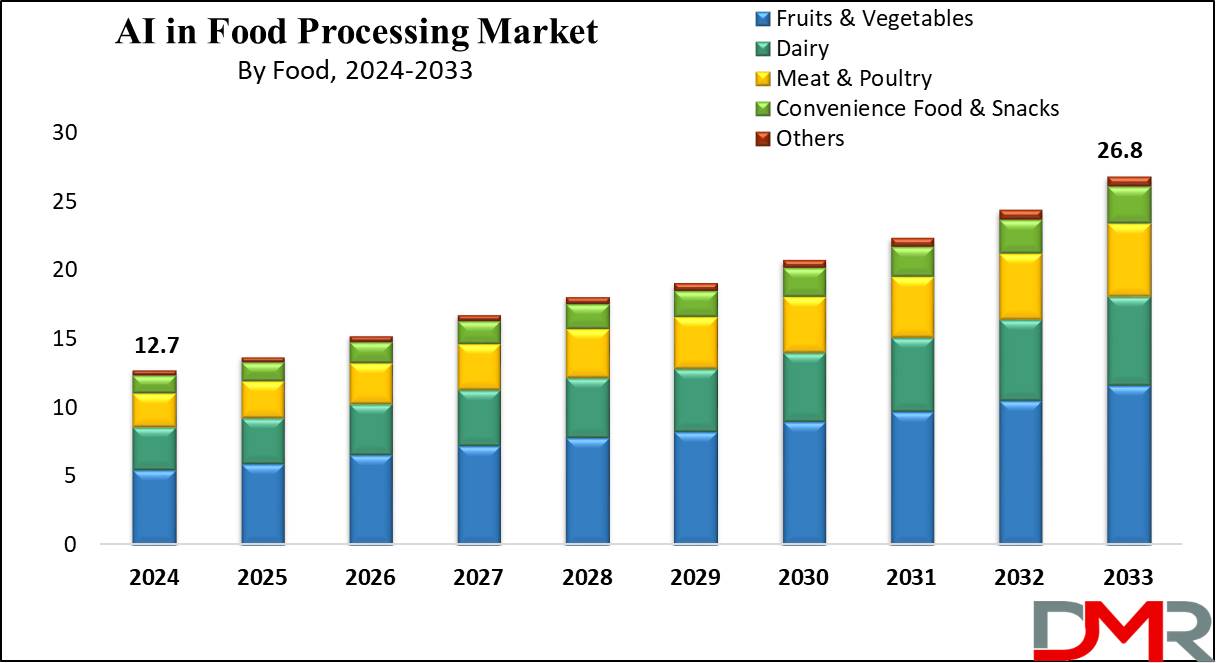
AI in Food Processing Market is projected to reach USD 12.7B in 2024 and grow to USD 26.8B by 2033 at a CAGR of 8.6%, driven by automation and innovation.
The AI In Food Processing Market is gaining momentum as food manufacturers increasingly adopt artificial intelligence to improve production efficiency, product quality, and operational performance. Growing demand for automated food manufacturing, rising labor costs, and the need for consistent product standards are encouraging the integration of AI-powered solutions across food processing facilities. Machine learning, computer vision, predictive analytics, and intelligent automation are helping manufacturers optimize production lines, detect product defects, monitor food quality, and reduce processing waste.
The market is also benefiting from advancements in robotics, smart sensors, and real-time production monitoring technologies. AI-enabled quality inspection systems are improving food safety by identifying contamination risks and detecting inconsistencies during manufacturing. Predictive maintenance and intelligent supply chain management are helping food processors reduce equipment downtime and improve resource utilization. Increasing investment in smart food factories, digital manufacturing infrastructure, and automated processing systems is expected to create new opportunities for AI technology providers as food companies prioritize productivity, quality assurance, and sustainable manufacturing practices.
Key Takeaways
- Market Growth: The AI in Food Processing Market size is expected to grow by 13.1 billion, at a CAGR of 8.6% during the forecasted period of 2025 to 2033.
- By Food: The Fruits and Vegetables segment is expected to lead in 2024 with a major & is anticipated to dominate throughout the forecasted period.
- By Technology: Machine learning as technology is expected to lead AI in the food processing market in 2024.
- By Application: Quality Control & Safety Compliance is expected to get the largest revenue share in 2024 in the AI in Food Processing market.
- Regional Insight: North America is expected to hold a 37.5% share of revenue in the Global AI in Food Processing Market in 2024.
- Use Cases: Some of the use cases of AI in Food Processing include quality control & inspection, predictive maintenance, and more.
Use Cases
- Quality Control and Inspection: AI can be used in food processing to improve quality control & inspection processes. Machine learning algorithms can look into images of food products to detect defects, contaminants, or deviations from quality standards, which ensures that only safe & high-quality products reach consumers, minimizing the risk of foodborne illnesses & enhancing brand reputation.
- Predictive Maintenance: AI-driven predictive maintenance can maximize equipment performance & reduce downtime in food processing plants. By analyzing data from sensors & machine logs, AI algorithms can look into when machinery is likely to fail or need maintenance, which helps prevent unexpected breakdowns, reduces maintenance costs, and ensures constant operation of production lines.
- Optimized Production Planning: AI algorithms can look into historical production data, market forecasts for demand, and other relevant factors to improve production planning in food processing. By looking into patterns & trends, AI can recommend production schedules that reduce waste, minimize inventory holding costs, and meet fluctuating consumer needs more effectively, which leads to better efficiency and profitability for food processing companies.
- Ingredient and Recipe Optimization: AI can assist food processors in optimizing ingredient formulations and recipes to meet different objectives like cost reduction, nutritional enhancement, or flavor betterment. By looking at a large data set on ingredient properties, consumer preferences, and sensory perceptions, AI algorithms can provide optimal ingredient combinations and proportions, which allows food processors to create products that better align with market demands and regulatory needs, while also reducing development time and costs.
FULL REPORT – https://dimensionmarketresearch.com/report/ai-in-food-processing-market/
voters
Report Story 
Related Stories










Recent Stories